

Parts Manufacturing
From the production plan to quality control — you can tell which lot every part you delivered came from.
See the system with my own data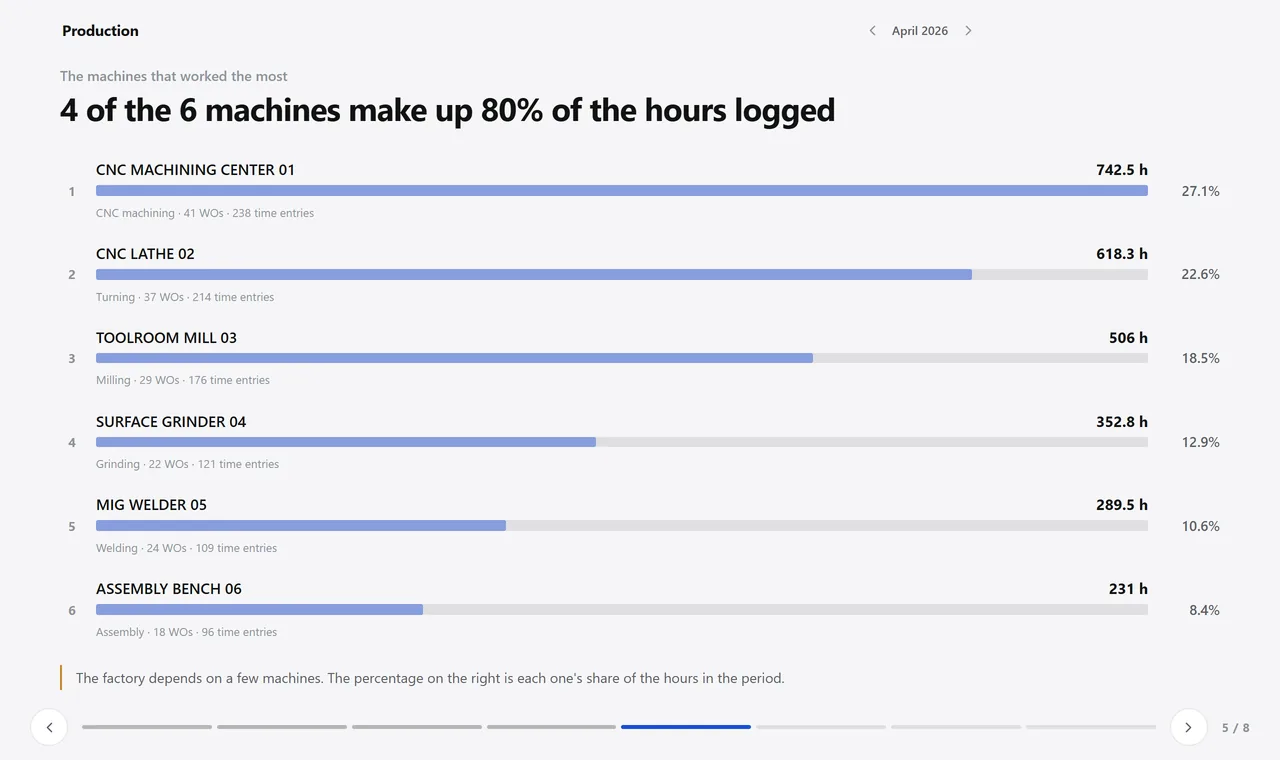
The machines that worked the most this month. A real system screen, with sample data. The screens are in Portuguese today. Scroll sideways to see the whole screen.
A day in this industry
The schedule arrives in a spreadsheet; the complaint, by the lot
Output dropped and nobody knows whether it was a machine down, material that didn’t show up or a long setup.
NCRs are filled out by hand; at year-end nobody knows how much was scrap and how much was rework.
With Develop
From the customer’s schedule to a part you can account for
- The schedule comes in without retyping
- The shop floor logs, production planning reads the capacity
- Material with certs, vendors with a score
- The part ships released and traceable
What a production parts shop needs from a system
Scheduled releases
- Customer schedule imported from the customer’s own file, without retyping
- Daily shipping plan by customer
- Load by machine and by employee, week by week
- Each item split between make, buy, pull from stock or rework
A shop floor with numbers
- Time logged on a touchscreen, with good parts and scrap
- Live machine dashboard, with machines that are down listed first
- Downtime hours by reason, in decimal hours
- Capacity utilization by machine group
Quality the customer audits
- Control plan by customer and part, with each characteristic’s class
- NCRs with severity, due date and corrective action
- Disposition as scrap, rework, use-as-is or repair
- Gauge calibration with interval, deviation and next due date
Vendors under evaluation
- Vendor quality score, month by month
- Receiving inspection with checklist, attachments and verdict
- New vendor qualification: certifying body, questionnaire and certificates
- Minimum score by vendor profile, with a meets / does not meet status
New parts and traced lots
- New part development in sixteen stages, planned vs. actual
- Sample (first article) approval in the design review
- Material cert and heat number of the lot issued to the job
- Consolidated spec sheet in PDF, revision history included
The modules that matter here: Production, Quality, Engineering, Projects, Inventory, and Purchasing.
Which lot did the last part your customer rejected come from?
See the system with my own dataA reply by email within one business day, from a person on our sales team — not a bot.